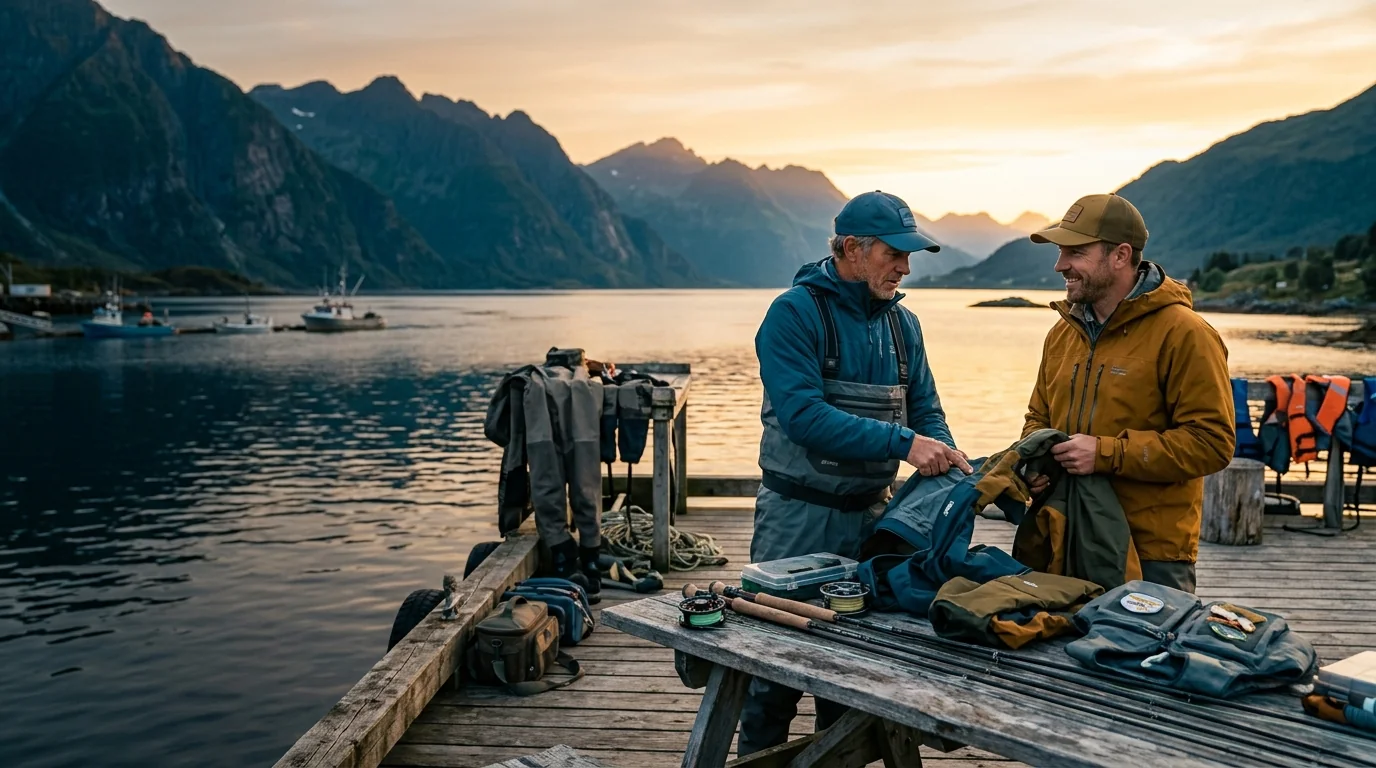
Book a Fishing Apparel Consultation. Talk Your Whole Project Through Before You Order.
A scheduled call with our sales and product team to scope your project, check what's feasible, and set a direction for fabric, decoration, MOQ and lead time — so your first order starts from a plan, not a guess. Pick a time in your zone, by video; you leave with a feasibility read, a rough schedule and a clear next step.
What a fishing apparel consultation is, and who should book one.
It's not a quick message and it's not an order form. It's a scheduled, advisory call to think your program through with the people who'll plan it — before any spec, quote or sample is locked.
What it is.
A focused 30–45-minute call where you talk your idea through with our team, and we pressure-test it against what the factory can actually do — realistic quantity, timeline, fabric, decoration and program shape. It's advisory and consultative: we're not selling you a run on the call, we're helping you decide whether and how to make it.
You can run your program under any of our four ordering programs — this is a fishing apparel manufacturer consultation, so part of the call is simply helping you pick the right one.
- You have an idea but aren't sure it's feasible — a founder validating a line before committing.
- You're sizing a season and want a realistic plan — a distributor or retail buyer weighing a range.
- You have a fixed event or retail date and need to know if the timeline is real — a charter fleet or tournament team.
- You're weighing fabric, decoration, MOQ and delivery all at once and want them untangled in one conversation.
What a fishing apparel consultation call covers.
Five things get settled on the call — your direction and the factory's capability meeting in the middle, so you leave with an aligned plan instead of a list of open questions. Each is a direction we set together, not a spec we dictate.
-
01Project scoping.
We get your product, use-case, brand direction and goals on the table and turn a rough idea into a defined program shape — what you're making, for whom, and what "done right" looks like. This is where a vague brief becomes something we can actually plan around.
-
02Feasibility check.
We tell you honestly what's realistic at your quantity, budget frame and timeline — and flag anything that won't work before you invest in it. Better to hear "that date is tight, here's what fixes it" on a call than after a PO.
-
03Fabric & decoration direction.
We point you to the right fabric family and decoration method for your use-case and market — sun-protection, cooling, stretch, print vs. embroidery — so you brief from a shortlist, not a blank page. (We steer here; the specs live on those pages.)
-
04MOQ & lead-time fit.
We match your quantity and target date to how production actually runs — the MOQ and lead time the factory works to — so your plan fits real minimums and a real calendar, and a retail window isn't missed by assumption.
-
05Next steps.
We agree the one concrete move that follows — a quote, a sample, or a factory audit — so you leave with a direction, not homework. (What each next step involves is What happens after, below.)
By the end, the two courses are one. Your idea and the factory's real capability line up on a single agreed plan — so you're not leaving with more questions, you're leaving with a direction.
Who you'll talk to on a consultation call.
You talk to the people who actually plan the build — not a call-center and not a bot. Two roles are on the call, each covering a different half of your project.
 The commercial half
Your sales / program lead
They frame your goals into a program: which ordering model fits, whether your quantity and timeline are realistic, and how the project should be structured so nothing is re-scoped later. They keep the plan honest — if a date or a budget frame won't hold, you hear it on the call.
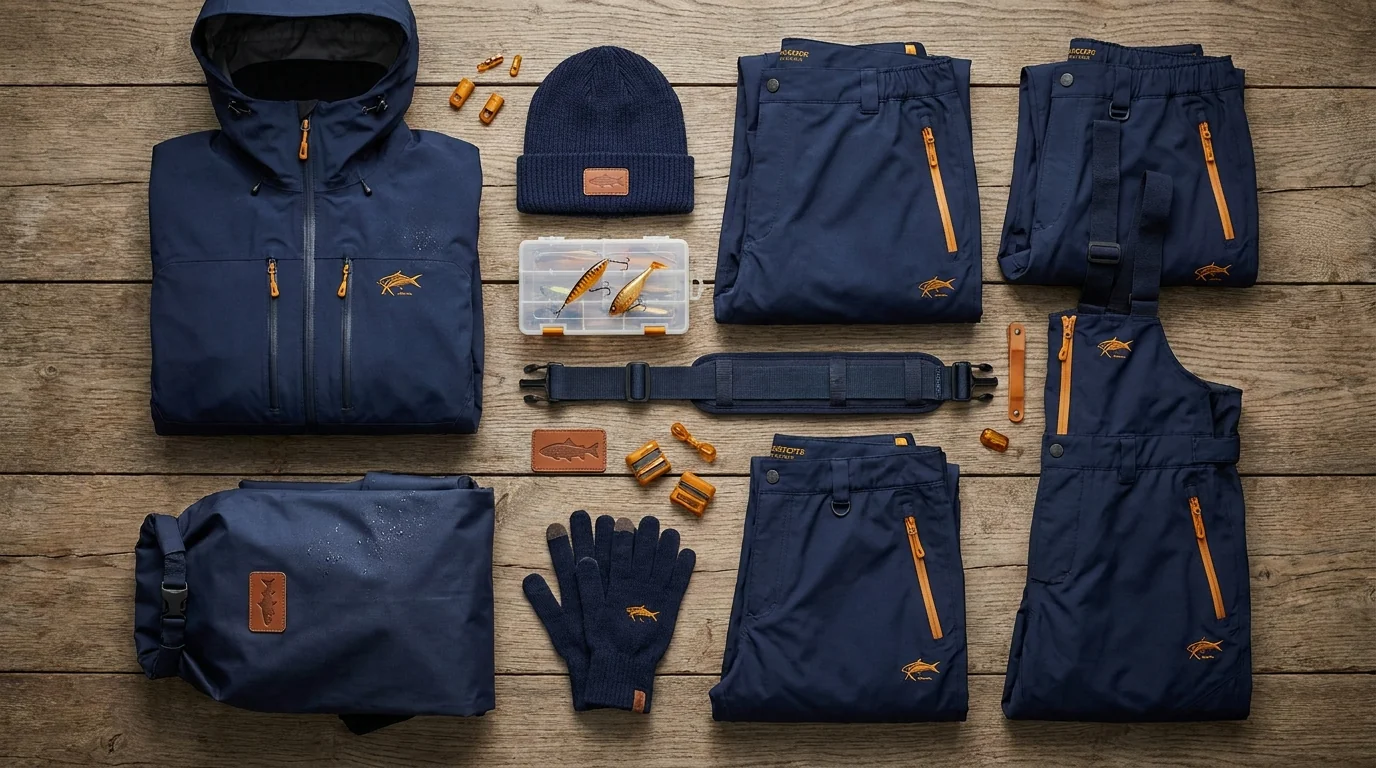 The make half
A product / technical specialist
They frame what's producible: which fabric and decoration suit your use-case and market, where a design choice helps or hurts durability on the water, and what the factory can and can't do at your spec. This is the person who stops a good idea from being an unmakeable one.
After the call, one project manager carries it forward. Whatever you decide, a single PM owns your file from there — quote, sample or production — so the plan you set on the call doesn't get handed to a stranger. More on the specialists behind your order on the team page.
How to book and run your consultation.
Booking is four short steps, and the call runs however suits you — most buyers do it by video from wherever they are, in a window that works across time zones. This is where you schedule a fishing apparel consultation on your terms.
Step 1Request a time.
Send the form below (or message us) with a couple of windows that suit you and your time zone — no back-and-forth needed to get started.
Step 2We confirm a slot in your zone.
We work GMT+8, Monday–Saturday, but book across time zones — early-morning for the Americas, evening for Asia-Pacific — and confirm a slot that overlaps your day.
Step 3You get a calendar invite.
A confirmed time lands in your inbox with a video link — Zoom, Google Meet or WhatsApp video, your pick — so nothing's ambiguous about when or how to join.
Step 4Join and talk it through.
A focused 30–45 minutes by video (phone if you prefer); longer, or a follow-up call, if the project needs it. Want to see the floor? We can fold a live video walkthrough into the call.
What to bring to your consultation call.
A pre-order fishing apparel consultation is only as useful as what you bring to talk about — but it's a conversation, not a submission. You don't need a finished spec; you need enough for us to think it through with you.
A rough project outline.
What you want to make and the goal behind it — a new line, a season refresh, crew and guest kit for a fleet. Even a paragraph is enough; the call is where we sharpen it.
Any references.
A garment you like, a competitor piece, sketches, a moodboard — something concrete to point at. Adjusting from a real object beats describing one from scratch.
Ballpark quantities and dates.
Even a range and a rough target window. Real numbers — however loose — are what make the feasibility and MOQ/lead-time parts of the call real instead of hypothetical.
Your open questions.
The things you actually need answered to move forward. The call is yours to drive, so bring the questions that are keeping the project on hold.
You do not need these yet. A finished tech pack, artwork files or a formal spec are for later steps — those go with a quote or a sample request, not a first conversation. Bring what you have; the team fills the gaps with you on the call.
What you leave the consultation with.
A consultation should move your project forward, not just fill a calendar slot. Here's what you actually walk away with — a plan, in hand, so the call turns into progress.
Course arrived — here's your take-away
-
A feasibility read.
A straight answer on whether your idea works at your quantity, timeline and market — and, if it doesn't, exactly what to adjust so it does. No polite maybes.
-
A rough schedule.
A realistic, high-level timeline from here to delivery, so you can plan around real dates. (Day-by-day production stages live on the brief-to-delivery timeline; the call gives you the shape.)
-
A fabric and decoration direction.
A shortlist of what fits your use-case and market, so when you brief formally you're choosing from a narrowed set instead of guessing.
-
A sample recommendation.
Which sample to order next — if any — to de-risk the run before you scale, and whether you even need one at this stage.
-
A written next step.
A short recap and the one concrete action to take next, sent after the call — so the plan doesn't evaporate the moment you hang up.
What happens after your consultation.
The call ends with a direction, and we route you straight to it. Your next step is usually one of three — and none of them starts from scratch, because the plan's already set. This is where a fishing apparel sourcing consultation turns into a move.
Get a quote
Ready for a number? We turn the scoped program from the call into a written, line-item quote — no re-explaining, since the brief is already aligned.
→ Path BRequest a sample
Want to hold it before you scale? Order the sample the consultation recommended, sewn on the exact bulk fabric.
→ Path CBook a factory audit
Want to verify us before a first PO? Take it further with an in-person or live factory audit of the floor.
→ Or nothing yet. No pressure to pick on the spot. The written recap is yours to sit with, and one PM stays reachable for when you're ready — pick the step up whenever the timing's right.
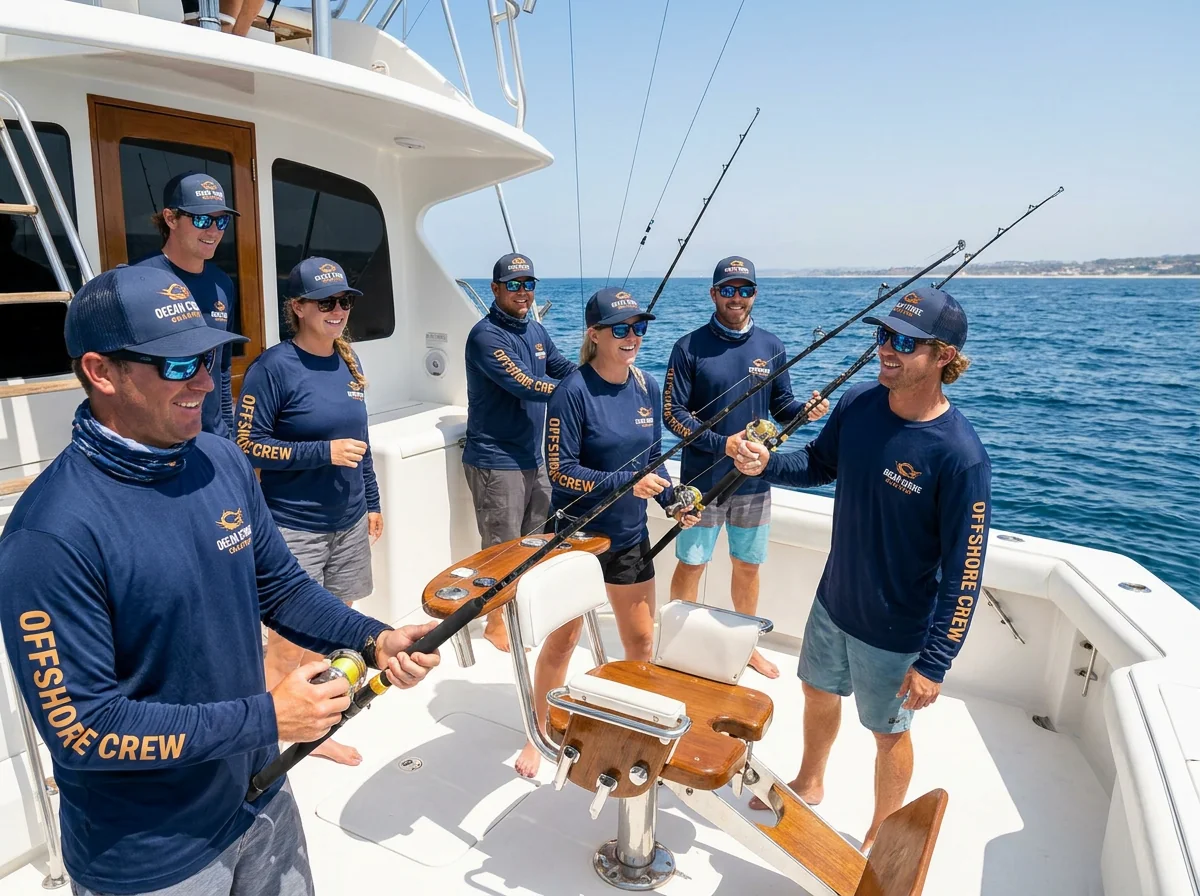
Book your fishing apparel consultation.
Tell us a bit about your project and a couple of times that suit you. Our sales and product team confirms a slot in your zone, and you'll get a calendar invite with a video link — a focused 30–45-minute call, no obligation, in plain English.
- No obligation — a scoping call, not a sales pitch.
- Sales and product, both on the call.
- Booked in your time zone (GMT+8 based).
- You leave with a feasibility read and a next step.
- NDA on request before you share plans.
Consultation questions, answered.
The questions buyers ask right before they book a call. If yours isn't here, ask it when you book.