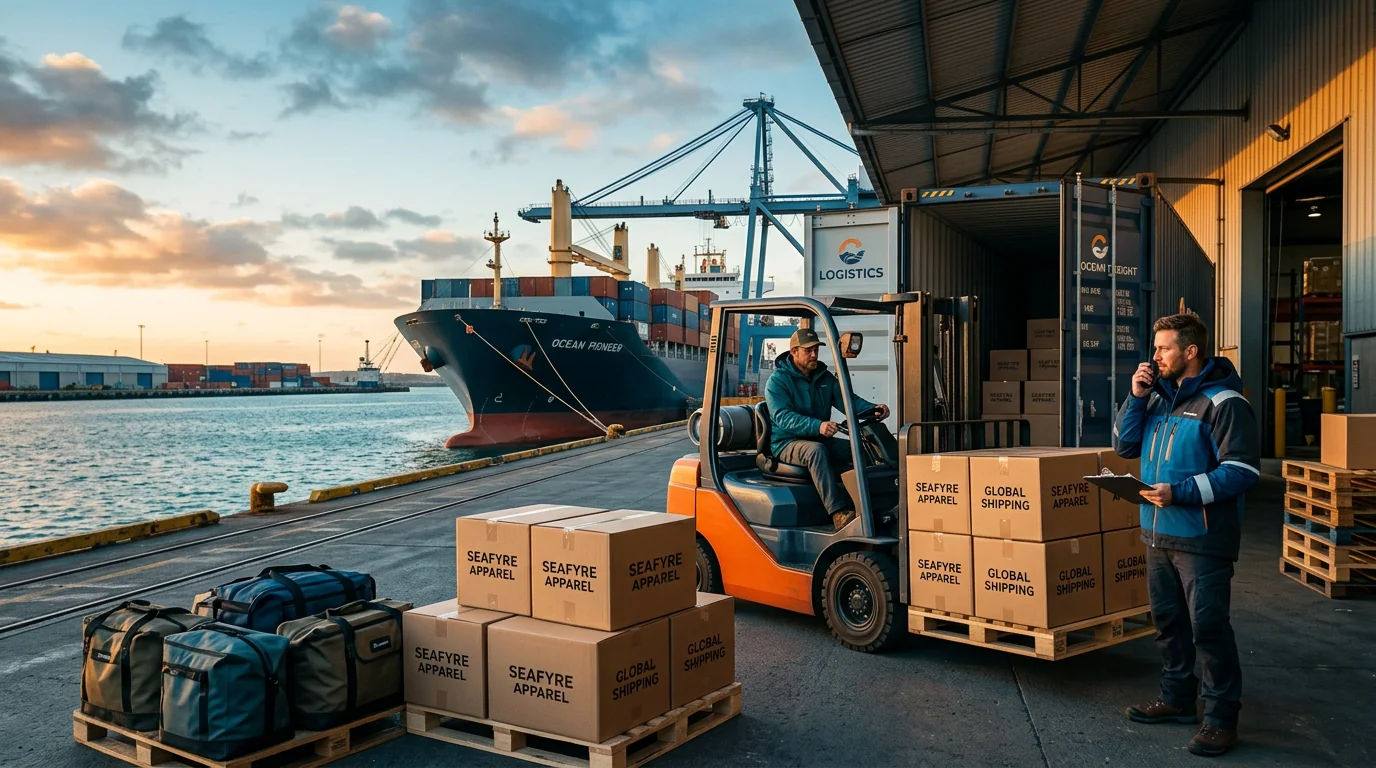
Fishing Apparel Shipping & Logistics, Delivered Worldwide, DDP or DDU.
How a fishing-only factory gets your finished order from the floor to your door — freight mode, the Incoterm handoff, transit and door ETA, export documents and customs — shipped worldwide to your warehouse, 3PL or Amazon FBA. Factory-stated; transit figures are typical and confirmed per shipment.
Shipping and logistics covers everything after your order leaves the floor.
This page starts where production ends — once your cartons are built and packed, here's how they travel to you: the freight, the Incoterm handoff, transit and customs, worldwide. Here's what that covers, where it sends you for the pack station, the production timeline or the branding, and who it's for.
What it is — the delivery side: freight booking and forwarding, the Incoterm split, export packing for transit, customs documents and clearance, transit and door ETA, and tracking — from the factory door to your warehouse, 3PL or FBA, worldwide.
Manufacturing is where the cartons are built and packed; shipping and logistics is how those cartons travel to your door. This page picks up once they leave the floor.If you mean the pack-and-ship station on the floor →
That's manufacturing services: the physical fold, poly-bag, carton and palletize station that closes production. Manufacturing is where the cartons are built and packed; shipping is how those cartons travel to your door.
If you mean how long the order takes to make →
The brief-to-ship production timeline covers sampling and production lead time. This page covers transit time — the days after dispatch, not the days on the sewing line.
If you want retail-ready or FBA branding →
Woven labels, hangtags, barcodes and FBA/retail cartons are private label packaging. This page handles export freight packing — carton marking and protection for the journey, not shelf branding.
Shipping methods: ocean, air and express freight.
Three ways your order can move, each a different balance of cost and speed. Here's how each runs and which order shape it suits — so you pick the mode by the deadline and the volume, not by guesswork. (We quote the freight structure, not a price, here.)
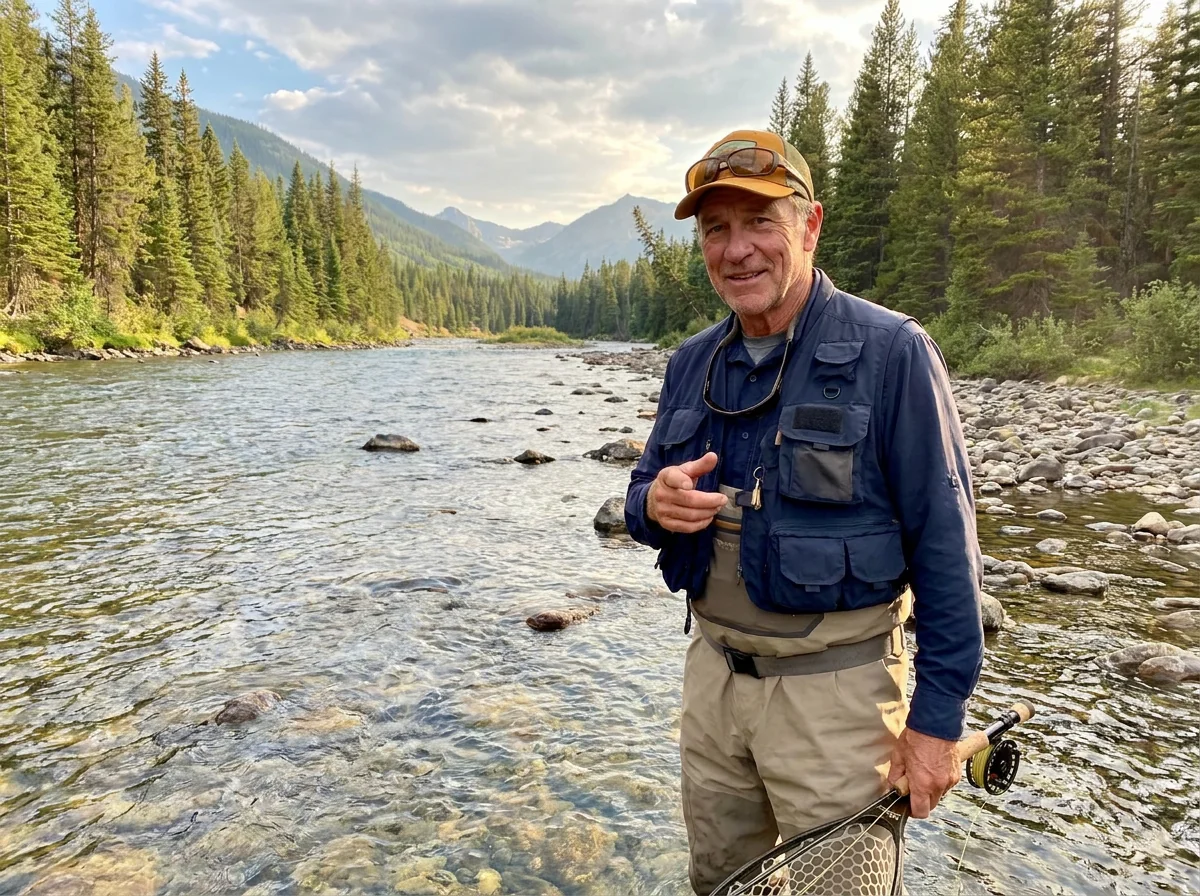
Ocean freight — the volume default.
For bulk and standing runs, sea freight moves the most for the least, in two forms: FCL (a full container, best once your volume fills one — loaded, sealed and moved as your own box) and LCL (a shared container, where your pallets ride with other cargo — best below a full load, at the cost of a few extra days for consolidation and de-consolidation). The slowest mode, but the workhorse for wholesale volume.
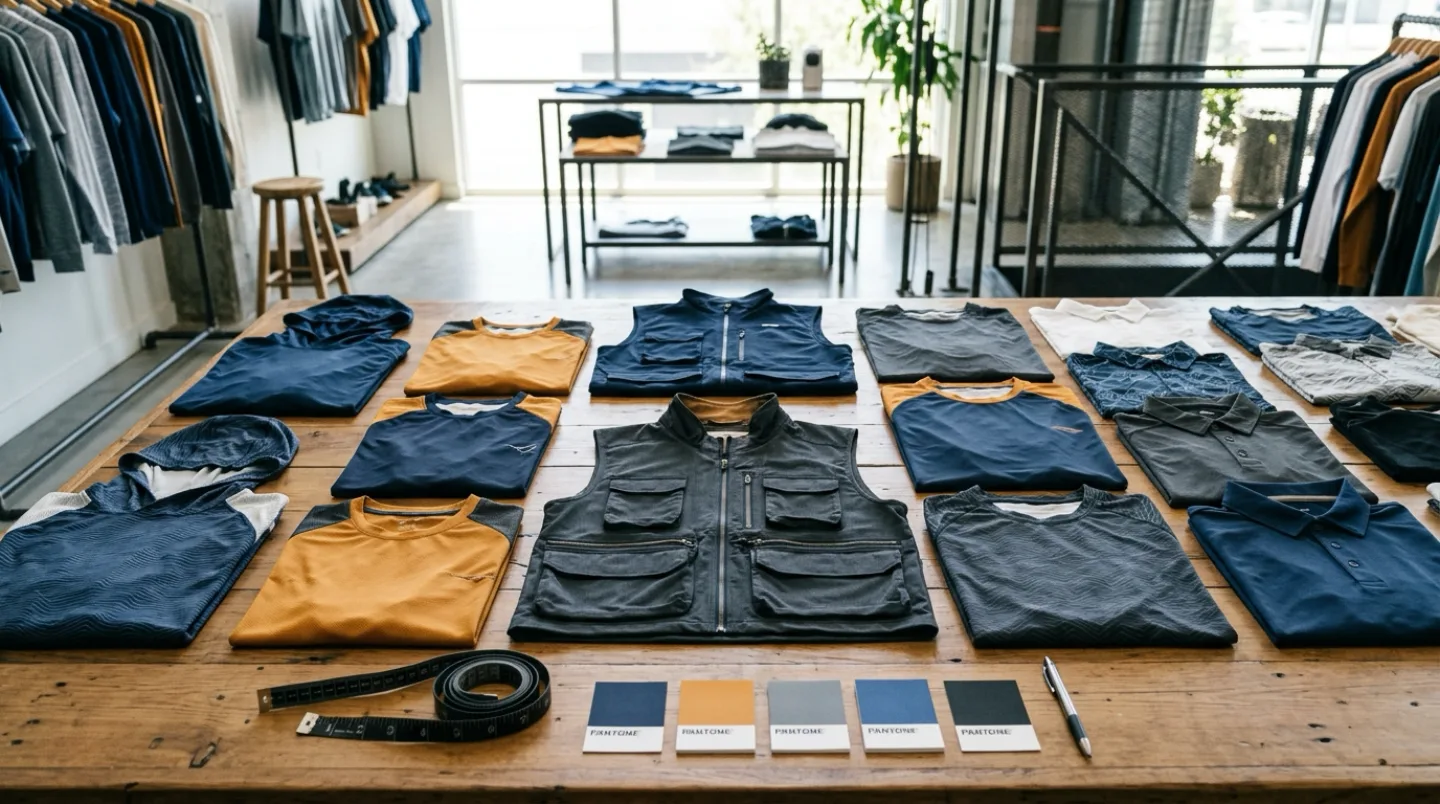
Air freight — when the date beats the cost.
Airport-to-airport in roughly 5–9 days plus clearance, for a season launch or a repeat that can't wait for the water. Costs more per kilo, so it fits urgent or lighter runs — a mid-season top-up, a sample-approved reorder against a hard on-shelf date.
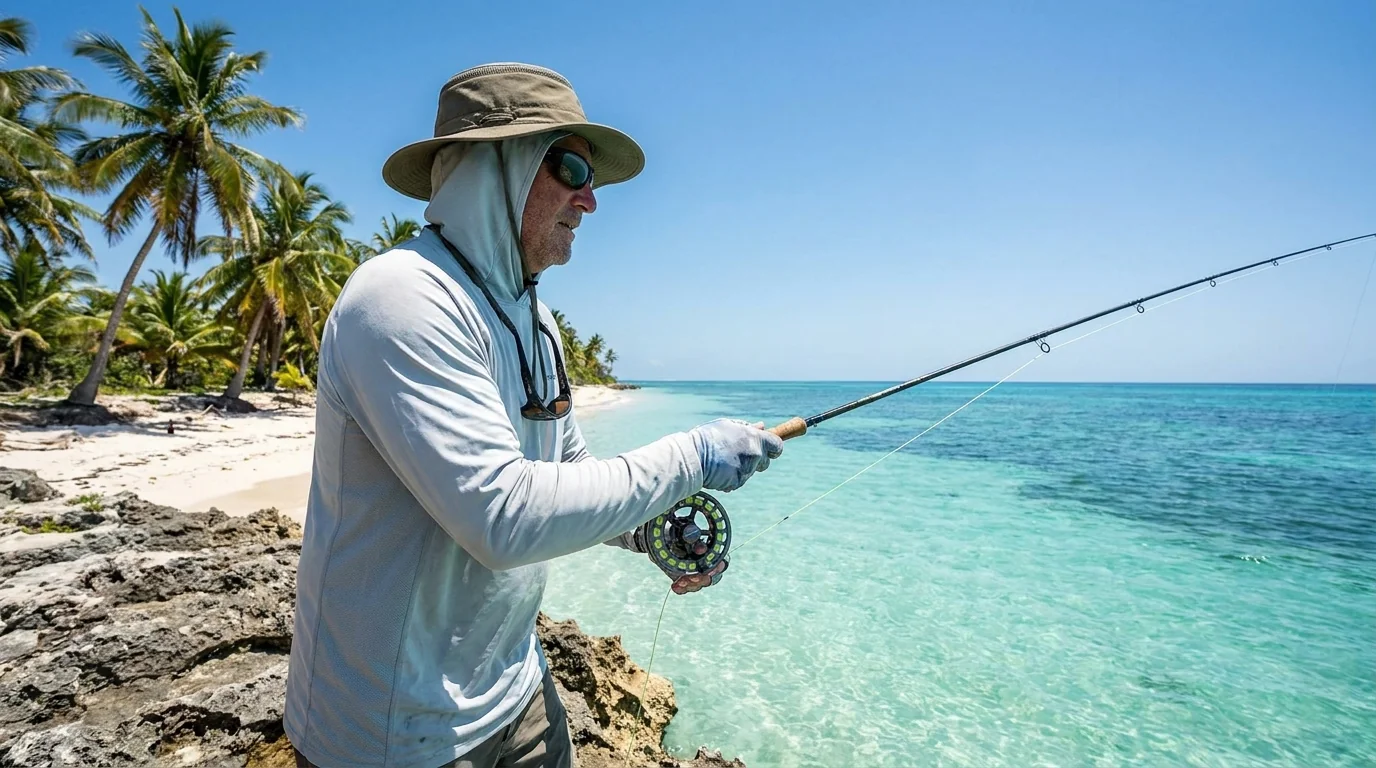
Express courier — samples and small, fast runs.
Door-to-door in about 3–7 days for samples, size sets and small first orders — the fastest and simplest, with no separate customs step for the buyer on a DDP courier lane. Best for getting a physical sample or a test grid in hand quickly.
Incoterms explained: who's responsible from the factory to your door.
An Incoterm is just the point where cost and risk hand off from us to you. Here's that handoff line across five terms, so you know exactly how far we carry the order before it becomes yours — and why we default to DDP or DDU worldwide. (Standard Incoterms 2020; confirmed on your contract.)
EXW — you take it from our door
Handoff at the factory gateFOB — we carry it onto the ship
Handoff at the ship's railCIF — we carry it across the water
Handoff at the destination portDDP — we carry it to your door, taxes in
Handoff at your door, duties paidDDU / DAP — to your door, taxes on you
Handoff at your door, duties unpaidEXW Ex Works — you take it from our door
Responsibility hands off at the factory gate: you arrange pickup, export clearance, freight and everything after. Most control, most work on you — rarely the right call for an overseas buyer without an agent on the origin side.
FOB Free On Board — we carry it onto the ship
We handle export clearance and delivery to the loading port and onto the vessel; from the ship's rail on, freight, insurance and import are yours. The common middle ground for buyers who run their own freight forwarder.
CIF Cost, Insurance, Freight — we carry it across the water
We cover ocean freight and insurance to the destination port; you take over at arrival for import clearance, duties and the last leg to your door. Risk transfers when it's loaded, but we've booked and insured the main haul.
DDP Delivered Duty Paid — to your door, taxes in
We own the whole chain: freight, insurance, import clearance and duties — you receive the cartons landed, nothing to arrange. The simplest for FBA sellers and brands who want one landed number and no customs step.
DDU / DAP Delivered, duties unpaid — to your door, taxes on you
We deliver all the way to your address, but you settle import duties and taxes at destination — common where a buyer's own broker clears more cheaply. Our default is DDP or DDU worldwide — we carry the order to your door either way; the only question is who pays the import tax.
| Incoterm | We’re responsible to | You take over from | Import duty & tax |
|---|---|---|---|
| EXW | Our factory door, goods ready for pickup | Pickup, export clearance, freight and everything after | You |
| FOB | Export-cleared and loaded onto the vessel | The ship’s rail — ocean freight, insurance and import | You |
| CIF | Ocean freight and insurance to the destination port | Arrival port — import clearance, duty and last leg | You |
| DDP | Your door — freight, insurance, clearance and duties | Nothing; cartons arrive landed | We pay |
| DDU / DAP | Your door — freight, insurance and delivery | Import duties and taxes at destination | You |
Pick the point on the line where you want to take over — we'll structure the shipment to hand off exactly there.
Transit time and door ETA, from dispatch to delivery.
Production lead time gets your cartons packed; transit time gets them to you. This section breaks down only the after-dispatch clock — port to port, customs, and the last leg — so you can set an on-shelf date. (Sampling and production days are on the production timeline; transit figures are typical, confirmed per shipment.)
Cartons leave the floor
Booked onto the mode and lane you picked. You get: the shipment booked, docs prepared and a dispatch confirmation. (What comes before — sampling to final QC — is the production timeline.)
Origin to port + loading
Cartons move to the loading port or airport, are cleared for export and loaded. You get: the bill of lading or air waybill once it's on board.
Main transit
Port-to-port on the water, or airport-to-airport by air, depending on the lane (the lane transit times are below). You get: in-transit tracking against the container or AWB number.
Customs clearance at destination
Import entry filed against your documents; on DDP we clear it, on DDU your broker does. You get: clearance status and, on DDP, duties handled. Clean, matching documents keep this to days, not weeks.
Last leg to your door
Cleared cargo moves to your warehouse, 3PL or FBA intake. You get: delivery confirmation.
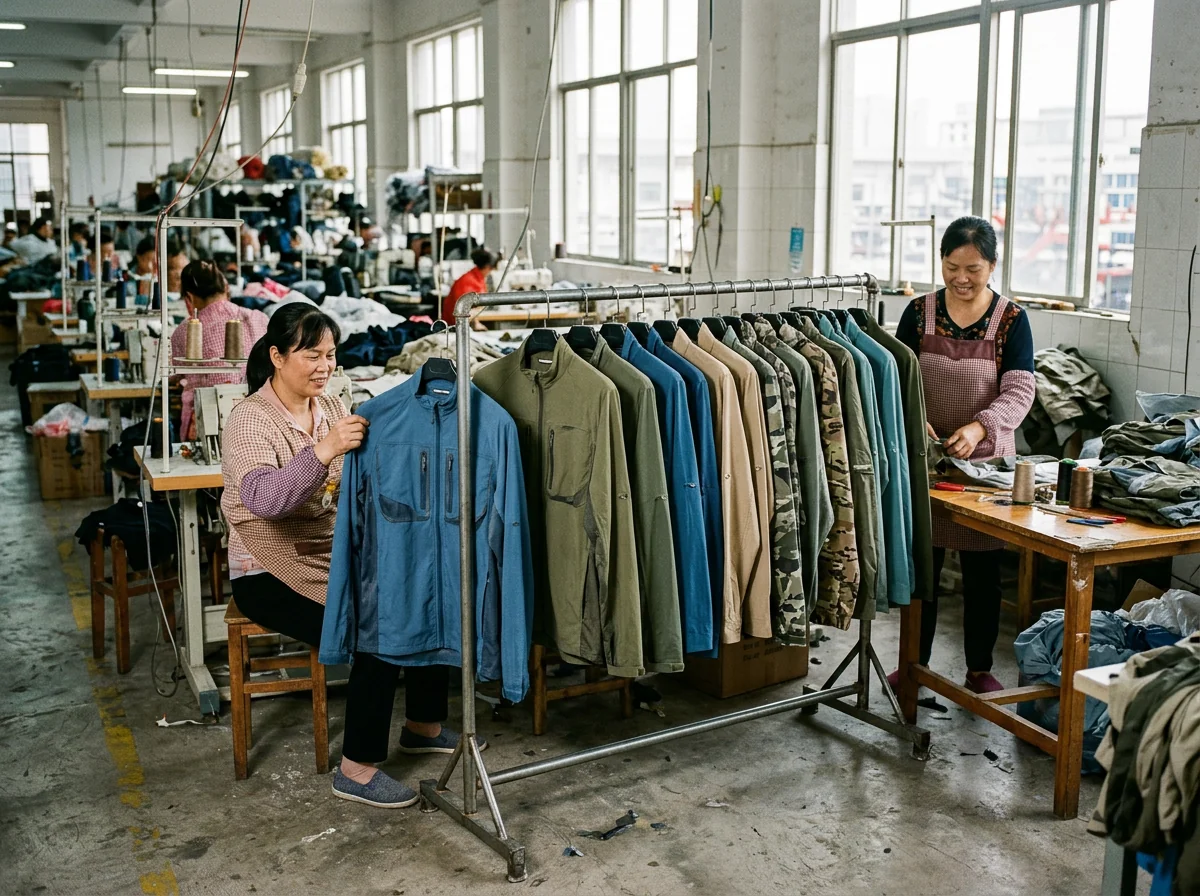
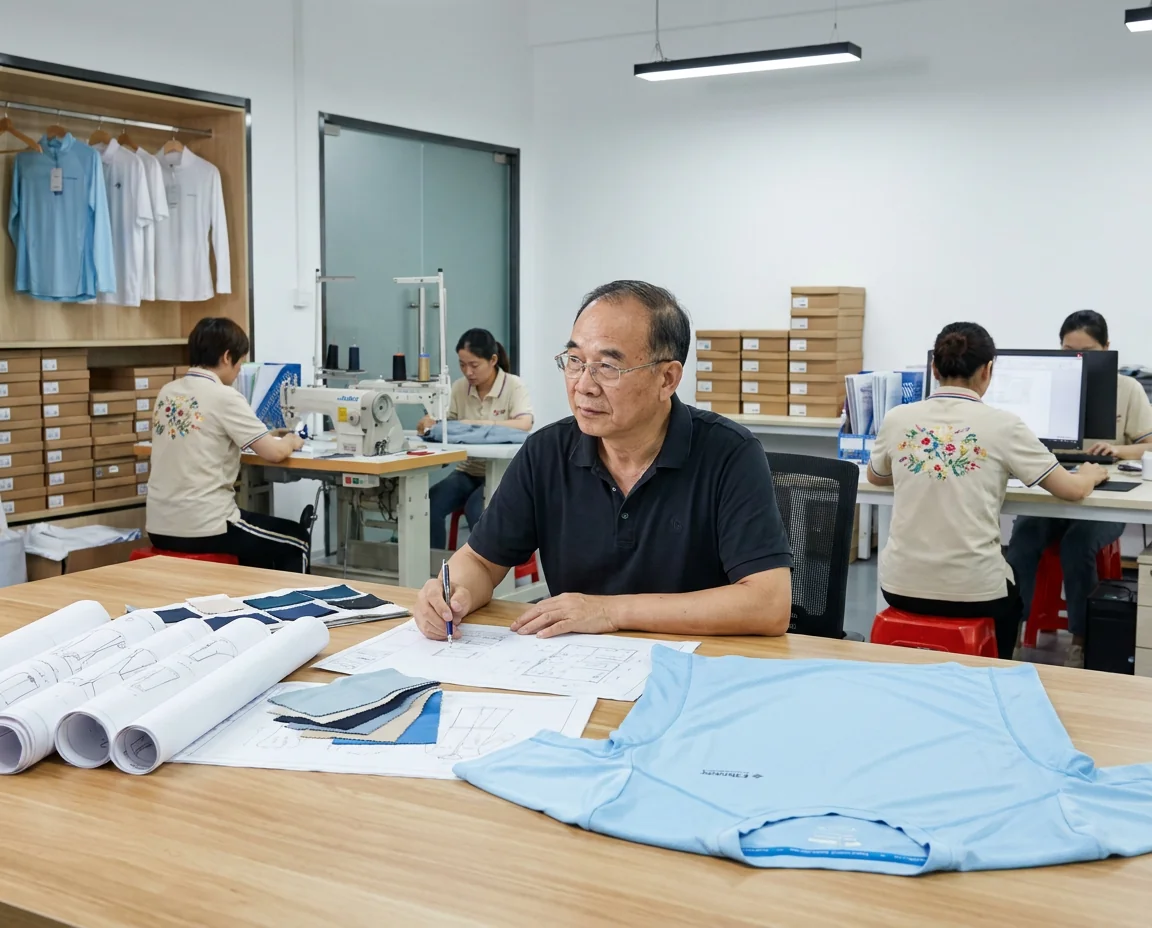
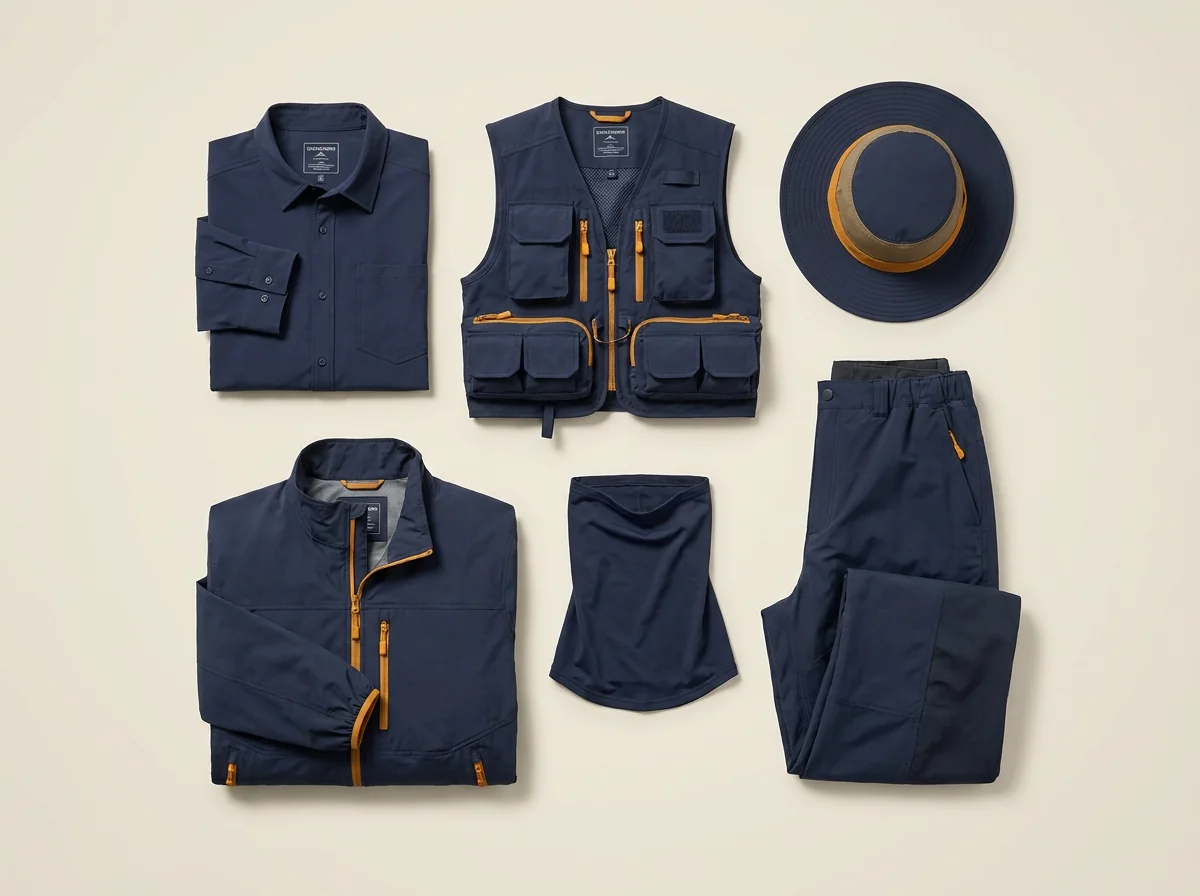
Export packing and carton marking for freight.
Getting the goods packed to survive the journey and clear customs is its own step — different from the retail packaging inside. Here's how cartons are built, marked and palletized for freight, so a box arrives intact and a customs officer can identify it. (Factory-stated.)
Master cartons built for handling
Garments are poly-bagged, then packed into double-wall master cartons sized to a manageable weight per box, so cartons stack and handle through a freight chain without crushing — the freight-side carton, not the retail box (branded, barcoded retail and FBA packaging is a separate layer).
Shipping marks on every carton
Each carton carries standardized shipping marks — order and carton number, destination, gross/net weight, dimensions and handling symbols — so your cargo is identifiable at every transfer and matches the packing list at customs, not a mystery box on a pallet.
Moisture protection for the water
Ocean containers sweat, so shipments carry desiccant and, where a run needs it, moisture-barrier liners — because a four-week sea transit is where unprotected knit picks up damp and mildew.
Palletized and loaded for the mode
Cartons are palletized and shrink-wrapped for LCL and air, or floor-loaded to fill an FCL efficiently — packed to the mode so you're not paying for shipped air or losing container space.
Export documents and customs clearance.
Most shipments that stall at a port stall on paperwork, not freight. Here's the document set that travels with your order, what each one does at customs, and how we prep it to match your Incoterm — so a first import clears in days, not stuck at the border. (Factory-stated; accredited test certificates are arranged separately.)
Commercial invoice & packing list
The invoice declares value and terms for duty assessment; the packing list maps every carton to contents, quantity and weight. Customs cross-checks one against the other and against your shipping marks — so they have to agree, and we build them from the same order data to make sure they do.
Bill of lading / air waybill
The carrier document that moves and releases the cargo — ocean B/L or air waybill, consigned to you or your broker per the Incoterm, so the right party can take delivery at destination.
Certificate of origin, on request
Where your market grants preferential duty or requires proof of origin, we arrange the certificate of origin so your customs can apply the correct rate instead of defaulting to the highest.
HS classification, matched to your market
Apparel clears under specific HS codes, and the wrong code means the wrong duty or a hold — we classify against your destination's tariff so the entry is filed right the first time.
Documents matched to the Incoterm, and clearance support
The document package is assembled to fit the term you chose — on DDP we file import entry and clear it for you; on FOB/DDU we hand your broker a clean, complete set. Either way, matching documents are what keep clearance to days. (Fabric compliance and lab test reports for your market are on compliance testing.)
Regional shipping lanes and transit times.
Programs ship across six regions, and each lane runs its own typical mode and transit window. Here are the lanes by delivery time — so you can plan a date against the route, not a guess. (Typical port-to-port ranges, confirmed per shipment; who buys in each region is on regions we ship to.)
| Region | Ocean | Air | Express | Typical terms |
|---|---|---|---|---|
| North America | 18–30d W. Coast | 5–8d | 3–6d | DDP to door or FBA; landed cost fixed up front |
| Australia & New Zealand | 14–24d | — | — | DDU common with the buyer’s own broker |
| Europe | 28–40d | 6–9d | — | DDP with destination-compliant labeling |
| Latin America | 30–45d | — | — | Often transshipped; air for date-critical runs |
| Middle East | 20–30d Gulf | 6–8d | — | Strong for hot-climate UPF programs |
| Southeast Asia & Japan | 7–18d | 4–6d | — | Shortest lanes; quick replenishment |
All six lanes ship DDP or DDU, freight-forwarder-friendly. Who buys in each region is on regions we ship to.
Shipment tracking and bulk freight planning.
A shipment isn't done when it's booked — it's tracked to the door, and a bigger or repeat program is planned to move cleanly. Here's how you stay updated and how we plan freight for volume, multiple destinations and FBA. (Factory-stated.)
Tracked against the container or AWB
Every shipment is tracked on its bill-of-lading or air-waybill number, so you can follow it from load to arrival — not left guessing between dispatch and delivery.
One contact through the shipment
Your project manager stays on the freight leg too — booking, docs, milestone updates and any customs question routed to one person, in your working hours, so you're not chasing a forwarder cold.
Consolidation — LCL when you're under a container
Below a full load, your pallets ship LCL so you're not paying for empty container space; once your volume fills one, we switch you to a cost-efficient FCL. We plan the threshold with you rather than defaulting to one.
Multiple destinations from one run
A single production run can be split to several destinations — a distributor warehouse, a 3PL and an FBA lane — cartoned and marked per destination so each arrives labeled for its intake.
FBA and 3PL, direct
Shipments can route straight to Amazon FBA or your 3PL provider, packed and documented to their intake rules, so a run doesn't detour through your own warehouse first. Tell us the destinations and we plan the freight around them.
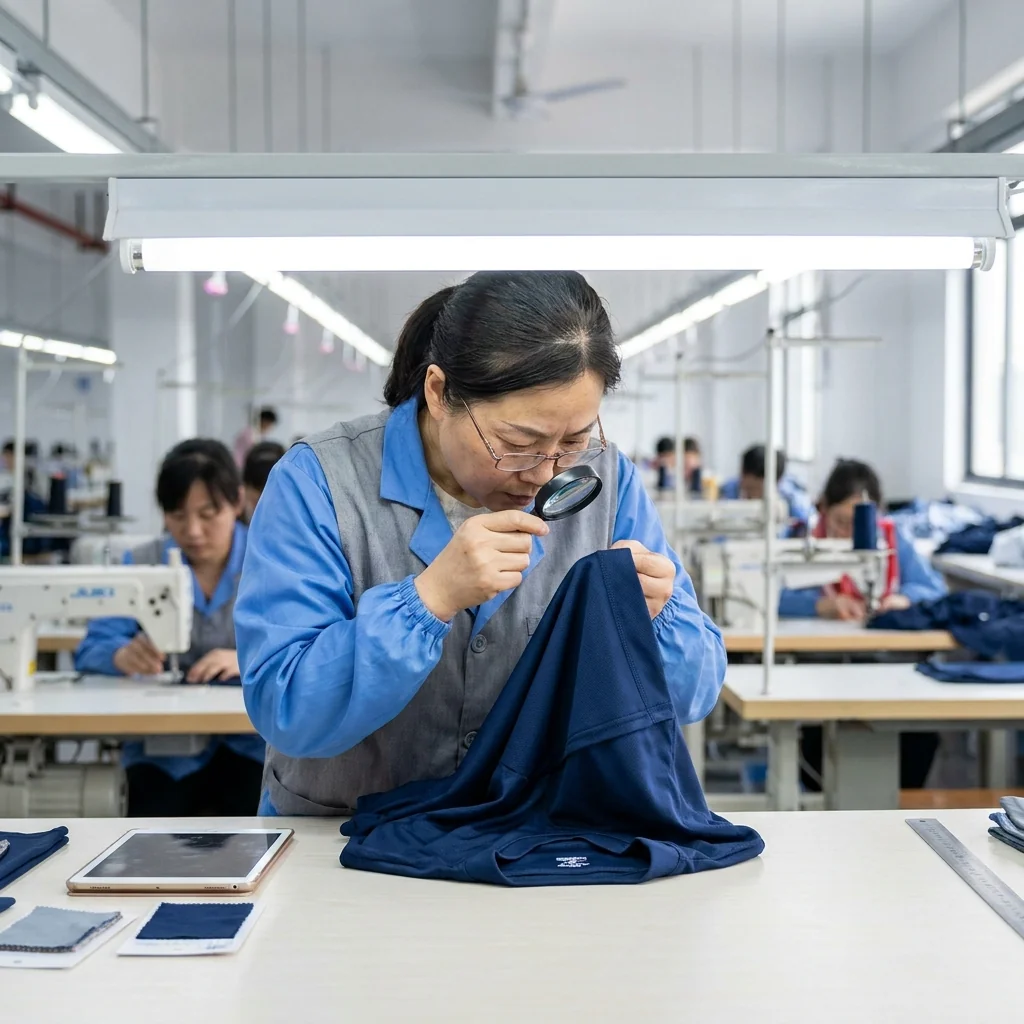
Get a shipping quote.
Send us your destination, order size, preferred Incoterm (DDP, DDU, FOB) and any date you're working to — you'll hear back within 24 hours, in plain English, with the freight structure and a door ETA.
- Response within 24 hours (GMT+8)
- Worldwide delivery — DDP or DDU
- Ocean, air or express — mode to fit your date
- Direct to your warehouse, 3PL or FBA
- Export documents & customs handled
Need a full price quote or a sample first? fishing apparel quote · request a sample.