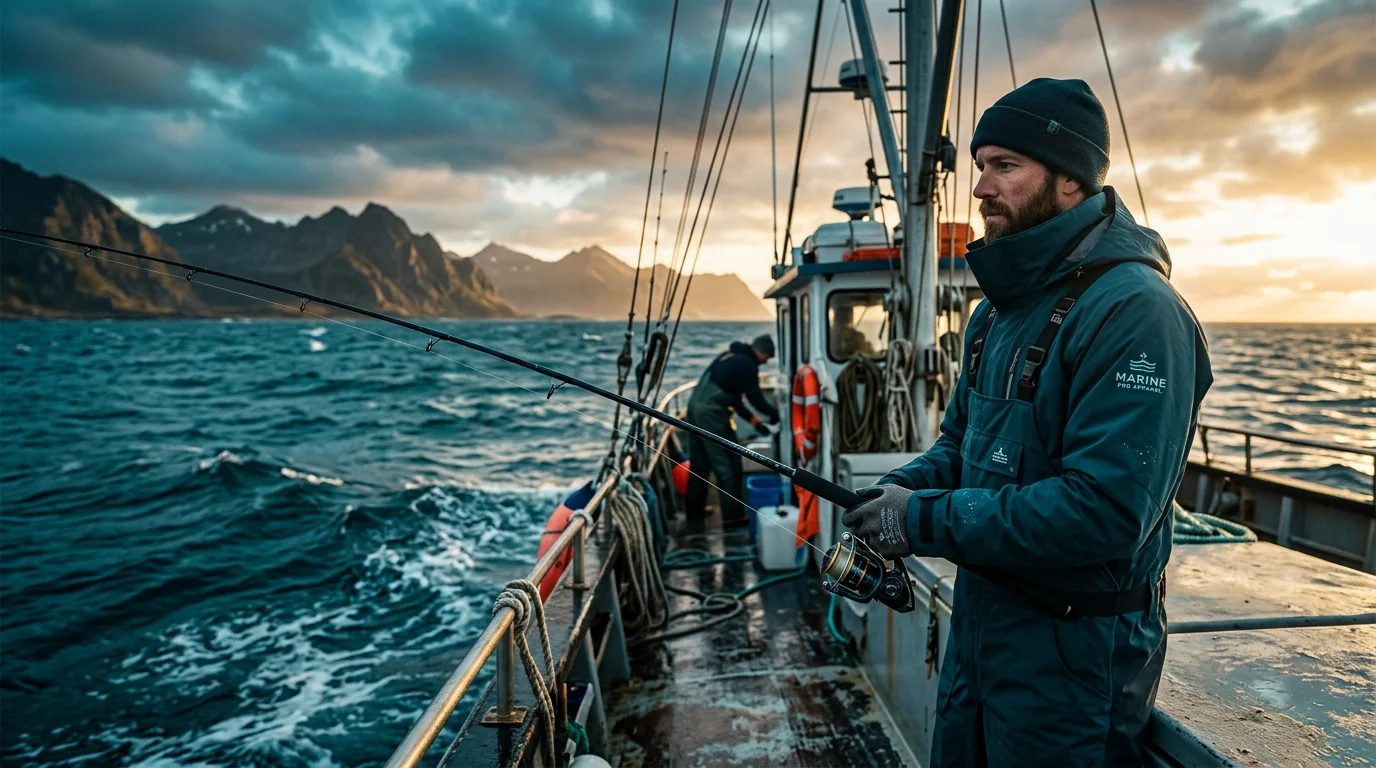
Apparel for Marine Brands, Built to Your Specs and Retail-Ready.
A fishing-only factory that builds an established marine, fishing or outdoor brand's apparel line to its own specs — we produce your multi-SKU seasonal collections from your tech packs, finished retail-ready to your specs, your care-label and barcode system, and delivered on your retail calendar, from 100 pcs per style.
Apparel for marine brands is contract manufacturing for a brand that already has its specs.
This is for an established marine, fishing or outdoor brand extending or running a fishing apparel line — you already own the brand, the specs and the quality standard, and we're the factory that builds your line to them. Here's what that covers, where it sends you if you need something else, and who it's for.
What it is — you own the brand; we run the line. You bring an existing brand, a tech pack (or a garment to match) and a quality standard your audience already knows; a fishing-only factory produces your line to it, collection after collection, retail-ready. We don't design your identity or start you from zero — you already have both, and we execute your spec.
Launching or scaling a brand from the ground up?
That's private label fishing apparel — turnkey branding, woven labels, packaging and low-MOQ test-and-scale for a business whose whole product is the apparel. This page is the opposite entry point: for a brand that already exists and hands us its spec, not one we help build.
Want us to design the range with you?
That's the custom gear program — design collaboration, mockups and sign-off when you don't have finished artwork. Here you bring the tech pack; we build to it, we don't develop it.
Want the factory's raw production capability?
That's manufacturing services — the cutting, decoration, sewing, taping and QC stations, station by station. This page is the brand-facing program around that capability: the relationship that turns your spec into a retail-ready line on a calendar.
Want blank garments to decorate yourself?
That's unbranded blank fishing apparel. Here what ships is your finished, retail-ready product to your specs — not a blank.
Your collection is produced as one coordinated range, not a stack of separate orders.
A season is a line sheet — a set of styles, colorways and size runs that has to read as one collection on the rack. We build the whole drop as one coordinated range against a single master spec, so the pieces belong together. Here's what we hold across the board. (Factory-stated; confirmed on the sample.)
A drop of roughly 8–20 SKUs — styles × colorways × size runs — planned as one line sheet.
-
One line sheet, one master spec.
Your drop's styles, colorways and size runs are laid out as a single line sheet and cut, matched and sewn against one master spec — so a shirt, a hoodie and a gaiter in the same collection are built as a set, not as three unrelated jobs that arrive looking different.
-
Graded across the full size run to your points-of-measure.
Every style is graded across your size run (for example S–5XL) to your own POM, so fit is consistent style-to-style and size-to-size across the range — the thing a retail buyer notices first on a fit-test.
-
One colorway held across every SKU in the drop.
A knit shirt, a woven short and a printed gaiter each take color differently, so we map the one approved colorway onto each substrate and hold it within a ΔE of about 2 — so the range merchandises as one story, not a set of near-matches.
-
Styles carried and added by the board.
New styles fold into the same line sheet each season and carryover styles hold to their logged spec, so the range widens or refreshes without re-sourcing or re-specifying what already sells — a program of roughly 8–20 SKUs a drop planned as a whole.
One board, one master spec — a multi-SKU collection built as a range, so it lands on the shelf as a collection.
We build to your tech pack, and match the quality baseline you already hold.
An established brand doesn't need us to design — it needs its spec built exactly and its existing quality met. Here's how we execute your spec and drop new production in next to your current stock without a visible step-change. (Factory-stated; under NDA.)
 Gold-seal matched
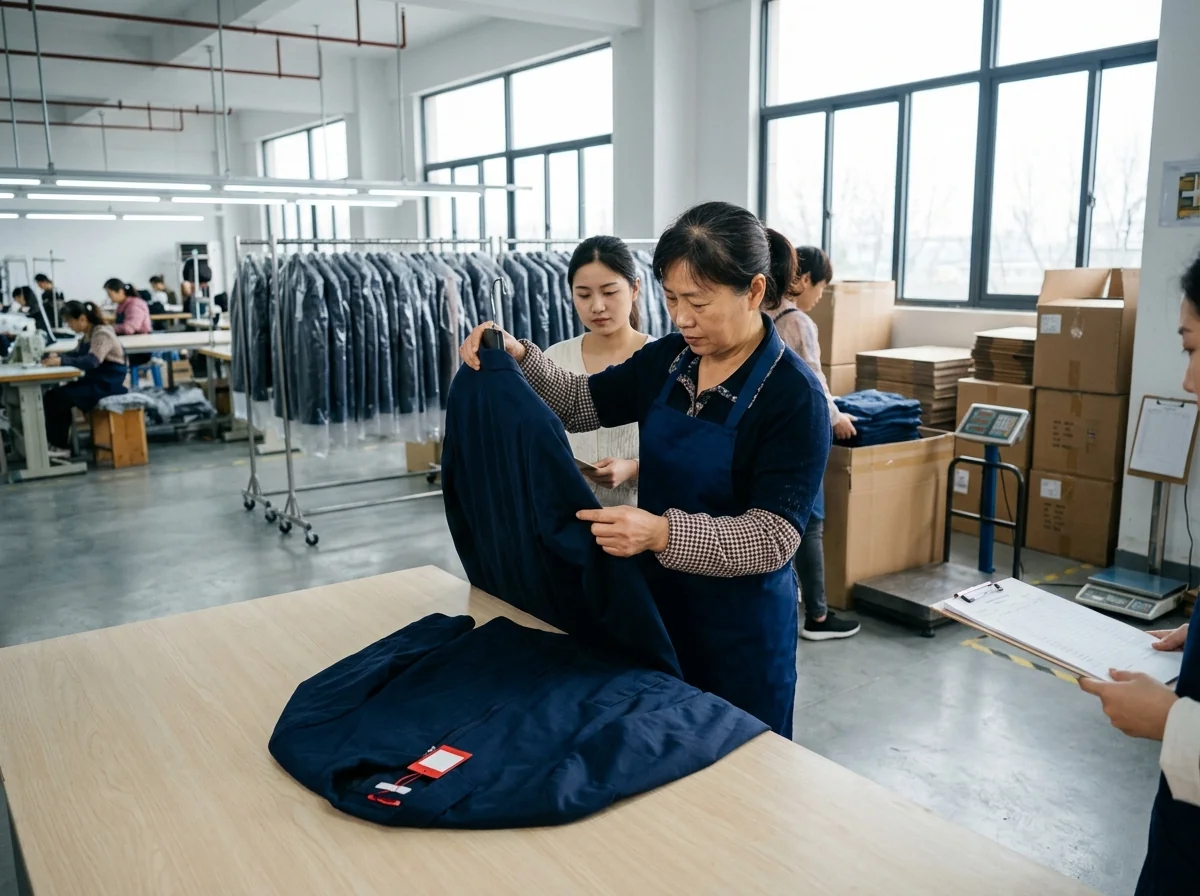 First-article sample
 POM tolerance
-
You own the spec; we build to it.
You hand us the tech pack — patterns or graded measurements, BOM, construction callouts, artwork, trims and your care-label spec — and we build to it exactly, with nothing changed without your sign-off. We don't redesign your brand; we execute the spec you already own. (If you don't have a spec yet and want us to help create the brand, that's private label.)
Tech packBOMConstruction calloutsSign-off gated -
Matched to your existing quality baseline.
If you already sell a line, your current garment is the gold standard — we spec-match fabric hand, weight, construction and fit to it, so a new run drops in beside your existing stock instead of reading as a different tier.
-
First-article sample against your gold seal.
Before bulk, a pre-production sample is built and checked against your approved reference (your gold seal), so the standard is agreed in hand — the sample sews in-house in 7–10 days on your actual fabric, fee credited back against the run.
Gold sealPP sample 7–10 daysFee credited -
Held to your tolerance, not a default.
Construction and measurement run to your POM tolerance table; where a style doesn't specify one, we hold roughly ±0.5–1.5 cm at grade to a standard apparel tolerance and flag anything your spec leaves open, rather than guessing.
The day-by-day production timeline is on the home page — this section is about building to a brand's own standard, not defining one.
Your line ships retail-ready to your own compliance system.
An established brand already has a compliance system — its own label copy, hangtag template, barcode scheme and retailer routing guides. We conform the goods to it, so a container lands DC-ready in your existing wholesale and retail pipeline. (Factory-stated; to your artwork and your market's rules.)
Care, content and origin labels to your spec.
We sew in your care / content / country-of-origin label to your artwork and your market's labeling rule — fiber content, care symbols, and RN / CA numbers where you use them — so the garment is compliant to retail in your channel, to your template rather than ours.
Your hangtag and price-ticket system.
Swing tags, price tickets or size stickers are applied to your template and placement — brand mark, style / SKU, and a price or QR field where your retail program uses one — so goods merchandise on your fixture the way your existing line already does.
GTIN / UPC barcodes per your SKU list.
Each SKU is poly-bagged and barcoded to your GTIN / UPC list and verified to scan, so goods take in at a retail DC or a wholesale account without a re-ticket.
Packed and marked to your retailer's routing guide.
Master cartons are labeled and shipping-marked to your routing guide — ratio / prepack cartons, carton content labels, GS1 SSCC pallet labels and an ASN-ready manifest on request — so a shipment lands DC-ready and avoids compliance chargebacks. (Amazon-FBA-style new-brand launch packaging is on private label if that's your channel instead.)
You set the compliance system; we conform the goods to it — so what ships slots straight into your existing retail and wholesale pipeline, shipped DDP or DDU.
Your collections ship on your retail calendar, drop after drop.
A brand plans a range around a season, so the factory has to deliver to that calendar — not a month behind it. Here's how a drop is scheduled, how capacity is held for your season, and how carryover stays consistent. (Factory-stated; the per-order timeline is on the home page.)
-
Booked backward from your on-sale date.
Milestones — spec lock, sample approval, material-in, bulk, QC, ship — are dated to hit your in-store date, so a drop lands for the season it's merchandised for.
-
Reserved capacity for your season.
A production block is reserved against our calendar for your drop, so a seasonal collection isn't queued behind other buyers — quarter after quarter.
-
Carryover held, newness folded in.
Carryover styles hold to their logged spec and lot for a consistent reorder, while seasonal newness is graded and sampled in parallel — so each drop refreshes the range without disturbing what already sells.
-
Repeats from a lower minimum.
A proven style repeats from about half the first-order MOQ, so a mid-season top-up or a next-season carryover doesn't reset setup.
Plan the calendar with us once and a collection ships on cadence, season over season — the step-by-step production timeline for a single order is on the home page.
Your line is inspected to your accepted quality standard, not just ours.
An established brand runs to a quality bar its audience already knows, so QC has to meet your standard, not a generic default. Here's how the run is inspected to your program and how you can audit it. (Factory-stated; the AQL sampling mechanics are on manufacturing services.)
-
Inspected to your accepted AQL and checklist.
Pre-shipment inspection runs to your accepted quality level — AQL 2.5 as our default, or to the AQL and inspection checklist your QA program already uses — with a photo report before goods leave.
-
Measurement audit to your POM.
A graded measurement audit checks the run against your points-of-measure and tolerance table, so a retail buyer's fit-test passes on arrival, not on a return.
-
Your inspector or a third party, welcome on the line.
You can nominate your own QA or an accredited lab (SGS / BV) to inspect before the container moves — we open the line and audit against your standard, not just ours.
-
Compliance and testing readiness.
Fabric can be specified to OEKO-TEX Standard 100, and youth styles built to CPSIA / Prop 65 where your market requires, with third-party test reports pulled to your standard on request — flagged at spec lock, not discovered at customs.
We run to the bar an established brand already holds — the AQL sampling mechanics and factory QC are detailed on manufacturing services and the lot-consistency mechanism on quality & workmanship.
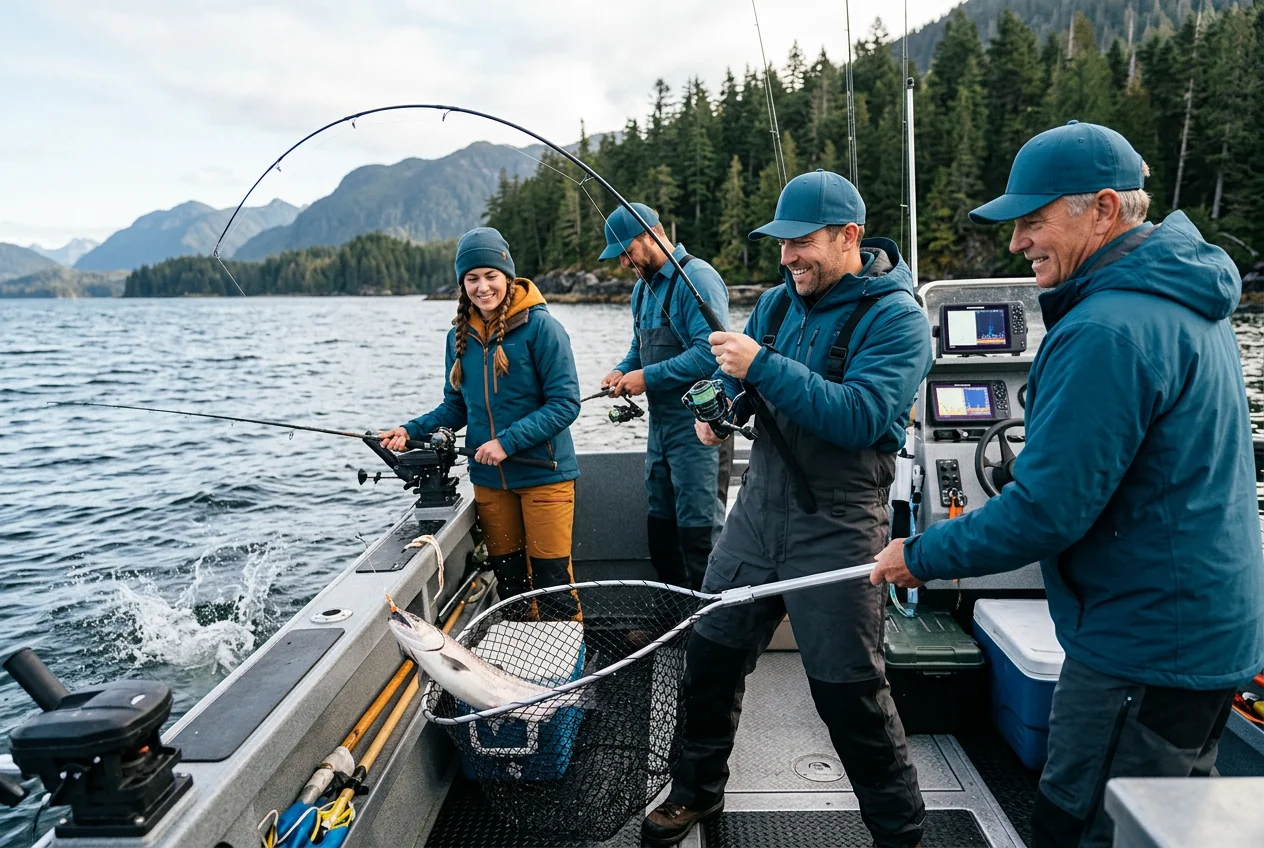
Representative marine brand apparel programs, by brand type.
Three representative programs, by the kind of brand that runs them — what a brand hands us, the collection we build, and the one number that mattered. (Representative by brand type; client names held under NDA; figures are factory-stated representative values.)
Run a program like these? Get a program quote →
Representative by brand type; client names held under NDA; figures are factory-stated representative values.
Apparel for marine brands, the questions brands ask first.
What product and sourcing teams ask before moving a fishing apparel line to a new factory.
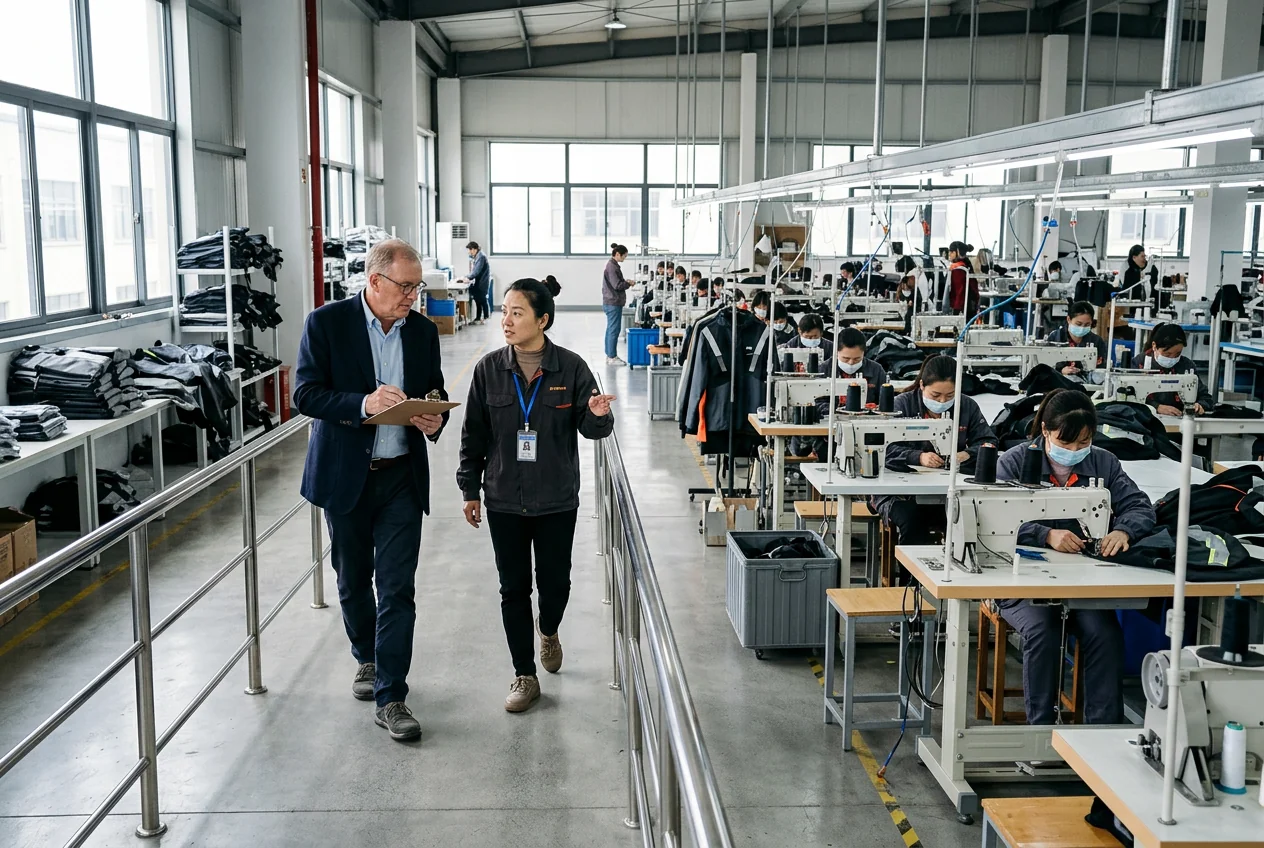
Start your marine brand's apparel program.
Send us your brand, your line, your SKUs or collection plan and your retail calendar — you'll hear back within 24 hours, in plain English.
- Response within 24 hours (GMT+8)
- Built to your tech pack and quality baseline
- Retail-ready to your care-label, hangtag & barcode system
- NDA & spec confidentiality on request
Want a first-article sample or a quote first? request a sample · get a quote